Radiator Size Explained: What It Means for Aio Liquid Coolers
As an Amazon Associate we earn from qualifying purchases. Links on this page are affiliate links.
Understanding Radiator Size Specifications
Radiator size explained is a key concept for anyone building a custom loop or choosing an AIO. The specification defines the physical dimensions of the heat exchanger. This matters because a larger surface area allows more heat to dissipate into the air. You need to understand how manufacturers label these parts to make an informed choice.
The size is determined by two main factors. First, the length of the radiator fins. Second, the thickness of the core. Listings typically display these numbers in millimeters. For example, a 200mm length with 40mm thickness is a standard single-fan configuration. A 40mm thickness is common for high-performance units that push more air through dense fins.
You will see labels like 120mm, 240mm, 280mm, 360mm, or 420mm. These numbers refer to the total length of the radiator. The 120mm size fits one standard fan. The 240mm size accommodates two fans side by side. Larger sizes like 360mm or 420mm require more space in your case. They also move more air, which lowers component temperatures under heavy load.
Thickness is often overlooked but equally important. A 30mm radiator is thin and easy to fit. A 40mm radiator is thicker and more robust. The extra depth allows for more copper tubing and fins. This increases thermal mass and cooling capacity. However, it also reduces clearance for tall RAM sticks or CPU coolers.
When shopping, check your case compatibility. Measure the available space behind the motherboard tray or at the front. Ensure you have room for both the radiator and the fans. Do not assume all radiators of the same length are identical. Always verify the thickness and mounting hole pattern. This prevents installation headaches and ensures your system stays cool.
Radiator Size Options Compared
200mm
This specification typically denotes the length of the radiator or reservoir in millimeters. A 200mm dimension offers a compact form factor suitable for cases with limited space. It provides a moderate heat dissipation surface area compared to larger units. You might choose this size for smaller builds or custom loops where space is tight. For example, the ASUS ProArt LC 420 Cooler + PA602 Case uses this size for E-ATX builds. The Wisoqu 200mm Acrylic AIO also fits this category for custom reservoirs. The trade-off is reduced cooling potential compared to 240mm or 360mm radiators. You must ensure your case can accommodate the specific mounting dimensions. This size balances footprint and performance for many mid-range systems.
40mm
A 40mm specification usually refers to the thickness of the radiator core, not its length. This dimension indicates how much space the fins occupy along the airflow path. A 40mm thick radiator is quite dense and offers more surface area than a standard 25mm or 30mm unit. It is ideal for users who want maximum cooling efficiency in a single-fan setup. However, the increased thickness requires more depth clearance in your case. You must check that your fans can push air through the dense fins effectively. This size is less common for standard AIOs but appears in high-performance custom components. It suits builders prioritizing thermal headroom over compactness. Ensure your case supports this depth to avoid installation conflicts.
Is a 200mm Radiator Right For You
Who needs it
You should choose this configuration if your case has limited mounting space but you still require adequate thermal performance. The 200mm length fits in smaller chassis where larger 240mm or 280mm radiators simply will not install. The 40mm thickness is critical here. It ensures the unit does not interfere with RAM, GPU shrouds, or side panels. This compact profile allows for better airflow management in tight builds. You benefit from a balanced approach that prioritizes compatibility without sacrificing too much cooling potential. If you are building a mini-ITX system or a small form factor PC, these dimensions provide the necessary surface area to dissipate heat effectively while respecting physical constraints. It is the practical choice for space-constrained environments where every millimeter counts.
Who can skip it
You can ignore this specific size if you have ample space in your case and prioritize maximum cooling performance above all else. Larger radiators, such as 360mm or 420mm variants, offer significantly more surface area for heat exchange. If your case supports them, those units will provide better thermal headroom for high-end processors. The 200mm size limits your ability to dissipate extreme heat loads quickly. You should look for thicker radiators or longer lengths if your goal is overclocking or sustained heavy workloads. The 40mm thickness is also on the thinner side, which may restrict airflow through the fins compared to 60mm or 70mm options. Focus on finding a radiator that matches your case’s maximum support length and thickness rather than settling for this compact option. Prioritize heat dissipation capacity over space savings if your chassis allows it.
Radiator Glossary Terms
Radiator Length
The horizontal measurement of the heat exchanger in millimeters. Common sizes include 240mm, 280mm, and 360mm. Longer radiators provide more surface area for heat dissipation into the airflow.
Radiator Thickness
The vertical depth of the unit, typically 27mm or 40mm. Thicker cores contain more copper tubing and fins, improving heat transfer capacity but requiring more case clearance for installation.
Fins Per Inch
The density of aluminum plates inside the radiator core. Higher density increases surface area for cooling but restricts airflow. You must pair high-density cores with high-static pressure fans.
Core Material
The metal used for heat exchange, usually copper or aluminum. Copper conducts heat faster but is heavier. Aluminum is lighter and cheaper but requires more surface area for equal performance.
Fan Mounting
The position of the cooling fans relative to the radiator. Push mode directs air through the fins. Pull mode draws air through. Push-pull uses fans on both sides for maximum airflow.
Liquid Cooling Loop
The closed system circulating coolant to absorb heat. It includes the pump, radiator, and tubing. The radiator acts as the primary heat exchanger, releasing thermal energy from the fluid to the air.
Static Pressure
The fan ability to push air through dense obstacles like radiator fins. Measured in mmH2O. High static pressure is critical for thick radiators to ensure adequate airflow across the entire core surface.
Case Compatibility
The physical space available in your chassis for mounting. You must check front, top, or rear clearance. Ensure the case supports the specific radiator length and thickness you plan to install.
Quick picks
| # | Product | Best for | Price |
|---|---|---|---|
| 1 | ASUS ProArt LC 420 Cooler + PA602 Case | E-ATX builds needing physical monitoring and premium fans | Check price of ASUS ProArt LC 420 Cooler + PA602 Case on Amazon |
| 2 | Lizusidtsy 200mm Water Cooling Tank | Custom loop builders needing G1/4 reservoirs | Check price of Lizusidtsy 200mm Water Cooling Tank on Amazon |
| 3 | Wisoqu 200mm Acrylic AIO | Custom loop builders needing a 200mm acrylic reservoir | Check price of Wisoqu 200mm Acrylic AIO on Amazon |
Our 3 picks

ASUS ProArt LC 420 Cooler + PA602 Case
Best for: E-ATX builds needing physical monitoring and premium fans
- Radiator Size
- 200mm (what this guide is about)
View on Amazon: ASUS ProArt LC 420 Cooler + PA602 Case Affiliate link
This bundle pairs a 420mm radiator AIO with the PA602 E-ATX case. The cooler uses three Noctua NF-A14 industrial fans for high airflow and low noise. An illuminated meter on the unit shows live system load, temperatures, and fan speeds. The case includes dual 200mm fans and tool-less GPU mounting with built-in wheels. You get 450mm of reinforced sleeved tubing for durability and fit.
Pros
- Includes three Noctua NF-A14 industrial fans for strong cooling performance
- Illuminated meter displays real-time system load, temperatures, and fan speeds
- PA602 case features tool-less GPU mounting and built-in transport wheels
- 450mm reinforced sleeved tubing provides durability and flexibility
Cons
- Bundle is limited to black color options
- No software control or app management mentioned for the cooler
- Requires E-ATX case compatibility due to the PA602 chassis
Good fit if
- You want real-time monitoring via a built-in illuminated meter
- You need a complete E-ATX build with tool-less GPU installation
- You prefer Noctua fans for quiet operation
Skip if
- You require RGB lighting or software control
- You are building in a standard ATX or smaller case
- You need a cooler-only unit without a case
Verdict: ASUS ProArt LC 420 Cooler + PA602 Case is a robust solution for E-ATX builders who value physical monitoring and premium fans. It suits users who want a complete, transportable workstation build with high airflow capabilities.
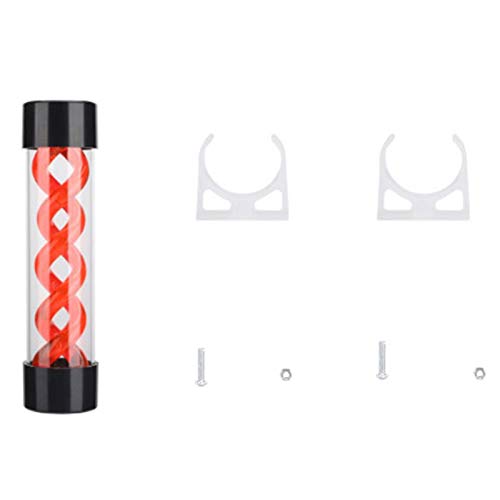
Lizusidtsy 200mm Water Cooling Tank
Best for: Custom loop builders needing G1/4 reservoirs
- Radiator Size
- 200mm (what this guide is about)
- Thread Size
- G1/4
- Dimensions
- 8.66 × 5.12 × 3.94 inches
- Weight
- 7.27 ounces
View on Amazon: Lizusidtsy 200mm Water Cooling Tank Affiliate link
This 200mm water tank uses acrylic and high-temperature engineering plastic for visibility and durability. It features G1/4 threads for secure, leak-free connections to your loop. The 45 mm diameter tubing helps hold and speed up cooling. You get a compact unit that fits into custom builds. It is designed for long-term use in PC water cooling setups.
Pros
- 200mm radiator size for standard loop compatibility
- G1/4 thread ports for tight, leak-free connections
- Acrylic transparent section for visual appeal
- 45 mm diameter tube for efficient cooling speed
Cons
- No integrated pump or fan included
- Requires separate reservoir and tubing assembly
- Limited color options available in data
Good fit if
- You are building a custom water cooling loop
- You need a 200mm compatible reservoir
- You prefer G1/4 thread connections
Skip if
- You want an all-in-one pre-filled unit
- You need a pump included in the box
- You require a different thread size
Verdict: Lizusidtsy 200mm Acrylic Water Tank is a solid reservoir for builders who need G1/4 connections and a 200mm form factor. It fits users who already have pumps and tubing ready for assembly.

Wisoqu 200mm Acrylic AIO
Best for: Custom loop builders needing a 200mm acrylic reservoir
- Radiator Size
- 200mm (what this guide is about)
- Material
- Acrylic
- Coolant Color
- Green
- Thread Size
- G1/4
View on Amazon: Wisoqu 200mm Acrylic AIO Affiliate link
This Wisoqu unit is a 200mm acrylic water cooling tank designed for desktop PC builds. It features a transparent body with green coolant and uses G1/4 threads for connections. The 45mm diameter tubing holds more water to help speed up cooling. The covers use high-temperature engineering plastic with strong glue for sealing. It suits users building custom loops who want a visible 200mm reservoir component.
Pros
- 200mm size for large coolant capacity
- 45mm diameter tubing for faster cooling
- Acrylic transparent body for visibility
- G1/4 thread connections for tight fittings
Cons
- No included pump or fan hardware
- Requires separate reservoir and tubing assembly
- Limited color options to Green, Red, Blue
Good fit if
- You are building a custom loop with a 200mm footprint
- You need a G1/4 threaded connection point
- You want a transparent acrylic reservoir
Skip if
- You need an all-in-one closed loop
- You require a pump included in the box
- You want a radiator size other than 200mm
Verdict: Wisoqu 200mm Acrylic Water Cooling Tank fits builders who need a dedicated 200mm reservoir for custom loops. It offers clear visibility and standard G1/4 threads but requires you to source the rest of the loop components separately.
Specifications side by side
| Spec | ASUS ProArt LC 420 Cooler + PA602 Case | Lizusidtsy 200mm Water Cooling Tank | Wisoqu 200mm Acrylic AIO |
|---|---|---|---|
| Radiator Size | 420mm | not stated | not stated |
| Material | not stated | not stated | Acrylic |
| Coolant Color | not stated | not stated | Green |
| Thread Size | not stated | G1/4 | G1/4 |
| Dimensions | not stated | 8.66 × 5.12 × 3.94 inches | not stated |
| Weight | not stated | 7.27 ounces | not stated |
| Size | ProArt LC 420 | not stated | not stated |
| Color | Black | red | Green |
| Model | not stated | 451099A1 | Wisoqu6d4u02bgxw-12 |
Frequently asked questions
What does a 200mm radiator size mean in practice?
A 200mm specification refers to the length of the heat exchanger or reservoir. This compact dimension offers a moderate surface area for heat dissipation. It is ideal for builders who need a smaller footprint than standard 240mm or 280mm units. You can use these in cases with limited mounting space.
Can I use a 200mm unit for a custom loop?
Yes, 200mm components work well for custom loops. Products like the Lizusidtsy and Wisoqu tanks use this size for reservoirs. They typically feature G1/4 threaded connections for easy assembly. You must source pumps and tubing separately to complete the loop setup.
Is a 200mm radiator thick enough for good cooling?
Thickness determines airflow resistance, not just length. Many 200mm units are 40mm thick, providing more fins for heat exchange. The ASUS ProArt LC 420 uses a 200mm length to deliver high airflow. Thicker cores generally handle higher thermal loads better than thinner variants.
Do 200mm AIOs come with fans included?
It depends on the product type. Complete AIOs like the ASUS ProArt LC 420 include premium fans for immediate installation. Reservoirs like the Wisoqu or Lizusidtsy are tank-only components. You will need to purchase fans separately if you buy a standalone tank for your loop.
What is the difference between a 200mm AIO and a 200mm tank?
An AIO is a sealed, pre-filled unit with a pump and block. A 200mm tank is an empty reservoir for custom loops. The ASUS ProArt is a complete cooler solution. The Lizusidtsy and Wisoqu are acrylic tanks requiring you to add coolant, pumps, and other parts manually.
Will a 200mm cooler fit in a standard mid-tower case?
Many mid-tower cases support 200mm radiators or reservoirs. This size is smaller than common 240mm or 280mm options. It fits chassis with limited front or top mounting space. Check your case specifications for maximum supported radiator lengths before purchasing.
Why choose a 200mm form factor over larger sizes?
You choose 200mm for space efficiency. It provides adequate cooling for moderate builds without requiring large chassis. This size is also popular for custom loop reservoirs where visual appeal matters. It balances thermal performance with a compact physical footprint for smaller workstations.