Thermaltake or ARCTIC? Aio Liquid Coolers Compared in 2026
As an Amazon Associate we earn from qualifying purchases. Links on this page are affiliate links.
When you look at the thermaltake vs ARCTIC aio liquid cooler market, you see two very different approaches. Both units are designed for high-performance cooling, but they prioritize different features. The Thermaltake Pacific CL360 focuses on a thick, copper-heavy radiator for passive heat dissipation. The ARCTIC Liquid Freezer II 420 takes a more integrated approach, including a dedicated VRM fan and modern socket support. You need to decide which specification matters more for your build.
Key differences
| Aspect | Thermaltake Pacific CL360 64mm Copper Radiator | ARCTIC Liquid Freezer II 420 AIO Cooler |
|---|---|---|
| Radiator Size | 360mm | 420mm |
| Radiator Material | Copper | not listed |
| Socket Compatibility | not listed | LGA1700 |
| VRM Cooling | not listed | 40mm fan |
| Weight | 1 pounds | 4.37 pounds |
Which one should you choose?
Choose Thermaltake Pacific CL360 64mm Copper Radiator if
- You prefer a lighter radiator that weighs only 1 pound.
- You want a radiator built with a high-density copper fin design for maximum thermal capacity.
- You need a 360mm size that fits in standard cases without the bulk of a 420mm unit.
Choose ARCTIC Liquid Freezer II 420 AIO Cooler if
- You require explicit compatibility with Intel LGA1700 processors.
- You want extra cooling for your voltage regulator modules via an integrated 40mm fan.
- You need a larger 420mm radiator for greater surface area and airflow potential.
Verdict: The Thermaltake Pacific CL360 is the better choice if you prioritize a lightweight, copper-focused radiator design. The ARCTIC Liquid Freezer II 420 is the stronger option if you need LGA1700 support and additional VRM cooling. Your case space and motherboard socket will likely determine the final decision.
Thermaltake vs ARCTIC Cooler Specs
Radiator Size
The ARCTIC Liquid Freezer II 420 features a 420mm radiator, while the Thermaltake Pacific CL360 uses a 360mm unit. A larger radiator provides more surface area for heat exchange, which generally improves cooling efficiency. The ARCTIC unit is also longer at 18.6 inches compared to the Thermaltake’s 17.4 inches. You must check your case compatibility carefully, as the ARCTIC’s extra length and height may not fit in all standard chassis. The Thermaltake offers a more compact footprint for smaller builds.
Radiator Material
The Thermaltake Pacific CL360 is built with a copper construction, specifically highlighting a high-density copper fin design. Copper has superior thermal conductivity compared to aluminum, allowing for more efficient heat transfer from the tubes to the fins. The ARCTIC product data does not specify the radiator material, so you cannot confirm if it uses copper or aluminum. If you prioritize the thermal properties of copper for passive heat dissipation, the Thermaltake has a clear material advantage that is explicitly stated in its specifications.
Socket Compatibility
The ARCTIC Liquid Freezer II 420 explicitly lists LGA1700 compatibility, making it ready for Intel's Alder Lake processors. This is a critical specification for users upgrading to newer Intel platforms. The Thermaltake Pacific CL360 data does not list specific socket compatibility, leaving you to verify support for your CPU manually. For modern Intel builds, the ARCTIC provides confirmed support for the latest socket type, reducing the risk of incompatibility during installation.
Pump Features
The ARCTIC Liquid Freezer II 420 includes an additional 40mm VRM fan that is PWM controlled and integrated next to the pump. This fan helps cool the voltage regulator module, providing extra thermal management for the motherboard. The Thermaltake data does not mention any additional fans or VRM cooling features, focusing instead on the radiator's copper construction. If you need active cooling for your VRMs, the ARCTIC offers a distinct hardware advantage that the Thermaltake lacks in its published specs.
Fan Speed Control
The ARCTIC Liquid Freezer II 420 specifies a fan speed range of 200-1700 RPM, indicating PWM control for precise adjustments. The Thermaltake Pacific CL360 data does not provide fan speed specifications, so you cannot determine its operational range or control method from the provided information. PWM fans allow you to balance noise and cooling performance more effectively. Without this data for the Thermaltake, the ARCTIC offers more transparency regarding its fan performance capabilities.
Which AIO Liquid Cooler Fits Your Build
DIY enthusiasts building custom loops
The Thermaltake Pacific CL360 is a standalone component for custom loops. It features a 64mm thick copper radiator with a triple-row flat tube design. This thickness increases thermal capacity compared to thinner units. The stainless steel frame adds durability without excessive weight. You must source your own pump and reservoir to complete the system.
Users needing LGA1700 support
The ARCTIC Liquid Freezer II 420 explicitly supports Intel LGA1700 sockets. This compatibility ensures it fits modern Alder Lake processors without adapter plates. The 420mm radiator provides more surface area than the 360mm Thermaltake. You get a complete, pre-filled AIO solution that requires no assembly of reservoirs or tubing for installation.
Those wanting extra VRM cooling
This ARCTIC cooler includes an additional 40mm fan specifically for voltage regulator module cooling. It is PWM controlled and sits next to the pump. This feature helps lower VRM temperatures by up to 15°C. The Thermaltake CL360 is a radiator only and lacks this integrated auxiliary fan for motherboard component cooling.
The products compared
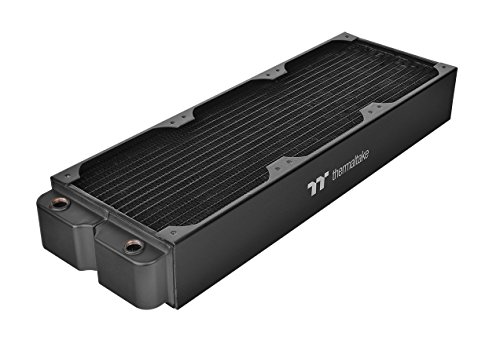
Thermaltake Pacific CL360 64mm Copper Radiator
Best for: DIY custom loop builders seeking copper radiators
- Radiator Size
- 360mm
- Material
- Copper
- Dimensions
- 17.4 × 6.53 × 3.8 inches
- Weight
- 1 pounds
View on Amazon: Thermaltake Pacific CL360 64mm Copper Radiator Affiliate link
This Thermaltake Pacific DIY system uses a 360mm copper radiator with a 64mm thickness and a triple-row flat tube design. The high-density copper fins provide 14 fins per inch for efficient heat dissipation. It includes a brass tank and stainless steel frame for durability. This setup suits builders who want to assemble their own custom loop rather than using a pre-filled unit.
Pros
- 64mm thick copper radiator for high thermal capacity
- Triple-row flat tube design with 14 fins per inch
- Brass tank and stainless steel frame for strength
Cons
- Requires manual assembly as a DIY system
- No pre-filled coolant included
- Heavier build due to copper and steel materials
Good fit if
- You want to build a custom liquid cooling loop
- You prefer copper radiators for better heat transfer
- You need a 360mm radiator size
Skip if
- You want a plug-and-play pre-filled cooler
- You need a 240mm radiator size
- You prefer aluminum radiators for lighter weight
Verdict: Thermaltake Pacific DIY 360mm Copper AIO is a robust DIY cooling solution for enthusiasts who want to build a custom loop. It fits builders who prioritize copper heat dissipation and manual assembly control.

ARCTIC Liquid Freezer II 420 AIO Cooler
Best for: LGA1700 builds needing VRM cooling
- Radiator Size
- 420
- Socket Compatibility
- LGA1700
- Fan Speed
- 200-1700 RPM
- Dimensions
- 18.6 × 6.11 × 6.7 inches
- Weight
- 4.37 pounds
View on Amazon: ARCTIC Liquid Freezer II 420 AIO Cooler Affiliate link
The ARCTIC Liquid Freezer II 420 is a 420mm AIO cooler designed for high thermal performance. It features a 40mm VRM fan to lower voltage regulator temperatures by up to 15°C. The pump supports PWM control with fan speeds ranging from 200 to 1700 RPM. It includes integrated cable management and supports LGA1700 sockets. This unit suits builders prioritizing cooling efficiency and component protection.
Pros
- 420mm radiator size for large heat dissipation area
- Integrated 40mm VRM fan reduces voltage regulator temperature
- PWM-controlled pump with adjustable fan speeds from 200 to 1700 RPM
- Sleeved tubing with integrated fan cables for cleaner builds
- LGA1700 socket compatibility for latest Intel processors
Cons
- Large dimensions require spacious cases for installation
- No software control or display mentioned in specifications
- Fixed black color limits aesthetic customization options
Good fit if
- You need extra cooling for high-end VRMs
- You have a large case for 420mm radiators
- You want integrated cable management
Skip if
- You prefer small form factor builds
- You need RGB lighting customization
- You want software control for fan curves
Verdict: ARCTIC Liquid Freezer II 420 AIO delivers robust cooling for LGA1700 systems and VRM protection. It fits builders with large cases who prioritize thermal performance over aesthetic customization.
Specifications side by side
| Spec | Thermaltake Pacific CL360 64mm Copper Radiator | ARCTIC Liquid Freezer II 420 AIO Cooler |
|---|---|---|
| Radiator Size | 360mm | 420 |
| Socket Compatibility | not stated | LGA1700 |
| Fan Speed | not stated | 200-1700 RPM |
| Material | Copper | not stated |
| Dimensions | 17.4 × 6.53 × 3.8 inches | 18.6 × 6.11 × 6.7 inches |
| Weight | 1 pounds | 4.37 pounds |
| Size | 360 | 420 |
| Model | CL-W191-CU00BL-A | ACFRE00092A |
| Color | not stated | black |
Frequently asked questions
Which AIO is better for LGA1700 builds?
The ARCTIC Liquid Freezer II 420 is the better choice for LGA1700 systems. It explicitly supports this socket type, ensuring proper compatibility with your CPU. Additionally, its design includes VRM cooling capabilities, which helps protect your motherboard components from overheating during heavy workloads.
Does Thermaltake offer a copper radiator option?
Yes, the Thermaltake Pacific CL360 features a copper radiator. This material is ideal for DIY custom loop builders who prioritize heat dissipation efficiency. Copper conducts heat effectively, making this unit a robust solution for enthusiasts who want to manually assemble their cooling loops.
Which cooler has the larger radiator size?
The ARCTIC Liquid Freezer II 420 has the larger radiator. It uses a 420mm size, compared to the 360mm size of the Thermaltake Pacific CL360. A larger radiator provides more surface area for heat exchange, which generally improves overall cooling efficiency for your system.
How thick is the Thermaltake radiator?
The Thermaltake Pacific CL360 has a 64mm thick radiator. This increased thickness adds thermal capacity compared to standard thinner radiators. It is designed to handle higher heat loads, making it suitable for builders who need robust passive heat dissipation in their custom loop setups.
Which AIO is lighter to install?
The Thermaltake Pacific CL360 is significantly lighter. It weighs only one pound, whereas the ARCTIC Liquid Freezer II 420 weighs 4.37 pounds. If you are concerned about the weight your case or motherboard needs to support, the Thermaltake unit is the lighter option.
Is the ARCTIC cooler compatible with large cases?
Yes, the ARCTIC Liquid Freezer II 420 is designed for large cases. Its 420mm radiator requires more space than standard units. You should verify that your case has enough room to accommodate its length and width before purchasing, as it prioritizes thermal performance over compact aesthetics.
What is the model number for the Thermaltake unit?
The model number for the Thermaltake Pacific CL360 is CL-W191-CU00BL-A. You can use this identifier to check specific dimensions or compatibility details on the manufacturer's website. It helps ensure you are purchasing the exact copper radiator version for your custom loop project.